
My kids loved
My kids loved
This is one of my go to for all occasions. I can use it calm wind to heavy wind and the distance is perfect for all the fields I go to. It feels really good to catch, nice and solid. It doesn't take too much power to get awesome flights.
This is going to be interesting, a fully programmable boomerang. It is carbon but it is a soft flimsy carbon so I couldn't use it in heavy wind like the Manu PRO COMPOSITE but I like the programmable aspect.
The carbon racer is heavier than the other racer and thus it needs either a much harder throw or more wind.
A little heavy and needs a stiff breeze. Also needs some tuning as it doesn’t hover but comes down fast.
My 7 year old grandson is having an absolute blast wit his new boomerang. Still working on mastering it but wonderfully intriguing and fun-giving.
Consistent return capability. May need rubber bands for high wind days.
THIS IS AWESOME! it is an ABS Bargan and it goes far and looks cool while it's doing it and it likes the wind. This is my first ABS and I LOVE IT!
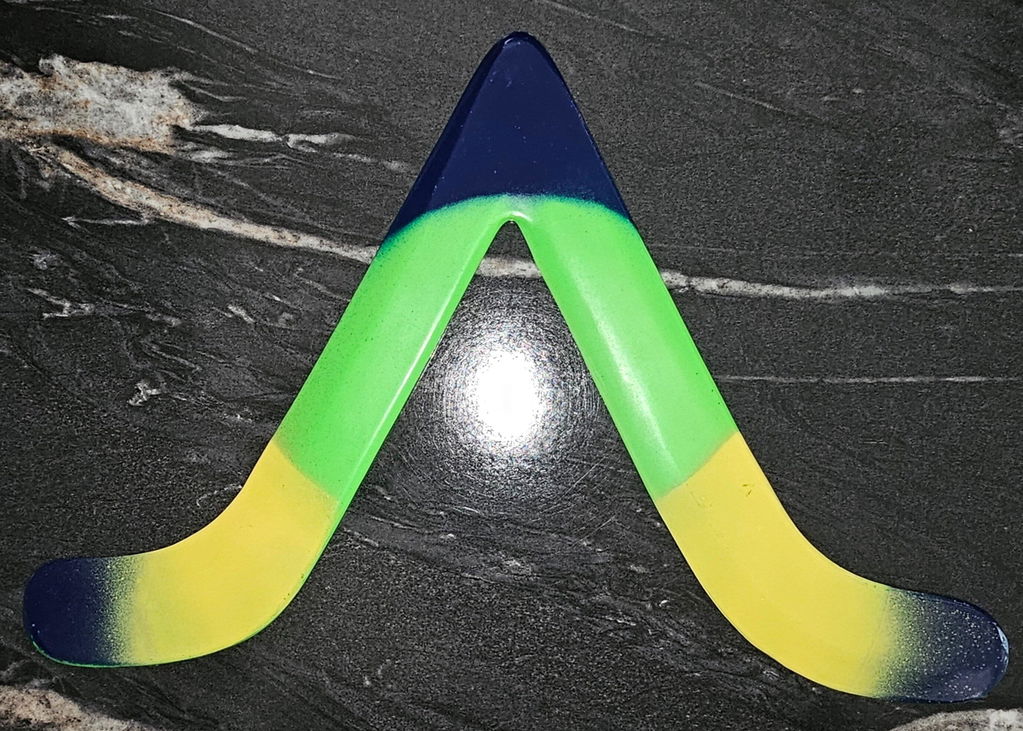
This is my second is 2 for me, I got it as a back up. These go farther then the Trifly, Spin Racer, and Trionyx, it feels like 40m FUN! thank you🙂